If you were injured on rental property in Michigan, a new decision from the state’s highest court just improved your position. On July 20, 2026, the Michigan Supreme Court decided Bowerman v. Red Oak Management Co., Inc., and the ruling matters to anyone injured on rental property, in an apartment parking lot, or by a dangerous condition a contractor left behind.
The Court sided with the injured tenant on two questions that come up constantly in Michigan injury cases: when a property manager can be held responsible for an unsafe common area, and when a contractor stays on the hook for a hazard it created and walked away from. Below is a plain-English breakdown of what happened, what the Court decided, and why it strengthens the rights of injured people across Michigan.
Key Takeaways
-
- In Bowerman v. Red Oak Management Co., Inc. (decided July 20, 2026), the Michigan Supreme Court revived an injured tenant’s lawsuit and sent it back toward a jury.
- A contractor can be held liable for a dangerous condition it created even after it finishes the job and leaves the site.
- Landlords cannot defeat a claim by calling a hazard a “mere inconvenience of access” that tenants could walk around.
- A tenant’s own awareness of a hazard goes to comparative fault; it does not automatically bar the claim.
What Happened in Bowerman v. Red Oak
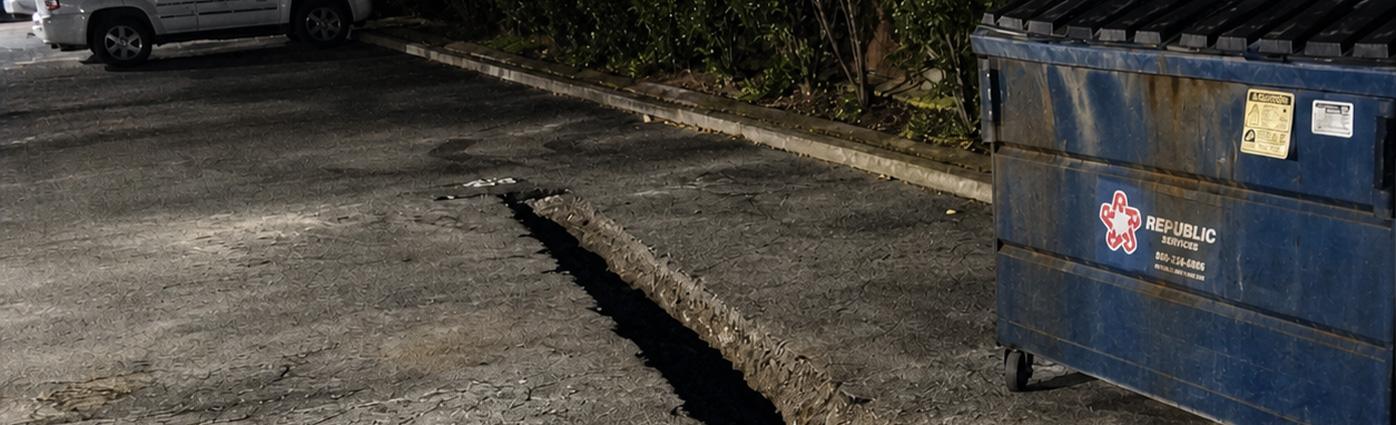
The plaintiff was a 75-year-old woman who lived in an apartment building for elderly and disabled residents. Her landlord’s management company hired a concrete contractor to replace the slab under the property’s dumpster. When the contractor finished and left, it created a trench roughly 10 feet long and four inches deep along the edge of the new concrete, right beside the trash-disposal area every tenant used.
The trench sat uncovered and unmarked for weeks. No cones, no caution tape, no warnings. Early one October morning, in a dark and underlit parking lot, the resident stepped into the trench while carrying her trash to the dumpster and fractured her ankle. She needed surgery.
She sued the management company and the contractor. The trial court threw out both claims before trial, and the Court of Appeals agreed. The Michigan Supreme Court reversed and sent the case back so it can move forward.
The First Ruling: A Contractor Can Be Liable Even After It Leaves the Job
One of the most important parts of the decision involves the contractor. The company argued it could not be sued because it no longer controlled the property when the fall happened. It had packed up and left nine days earlier.
The Court rejected that defense. It held that the claim against the contractor was an ordinary negligence claim, not a premises liability claim, because it was built on how the contractor did its work, not on who controlled the land at the time of the injury. Michigan law puts an obligation on anyone doing a job to use reasonable care so they do not create an unreasonable risk of harm to others. Digging a trench in a walkway used by elderly and disabled tenants and then leaving it open and unmarked can breach that duty.
The contractor’s own owner admitted the trench could be a tripping hazard and said his crews usually marked conditions like it with cones or caution tape. That admission alone was enough to send the question to a jury. The takeaway for injured people is direct: a contractor does not get a free pass just because it finished the job and drove away. The dangerous condition it left behind can still support a claim.
The Second Ruling: Landlords Must Keep Common Areas Fit for Their Tenants
The second ruling concerns the property manager and a Michigan statute, MCL 554.139(1)(a). That law places an automatic promise in every residential lease: the landlord covenants that the property and all shared common areas are fit for the use the parties intended. Parking lots, walkways, stairwells, and trash areas are common areas.
For years, landlords leaned on a phrase from an older case, Allison v. AEW Capital Management, arguing that a hazard was just a “mere inconvenience of access” that tenants could walk around. Lower courts turned that phrase into an escape hatch, dismissing case after case.
The Supreme Court shut that door. It clarified that “mere inconvenience” is not the controlling test. The real question is whether the common area was fit for the use the parties intended. A hazard that forces tenants to detour around it is not automatically acceptable just because a detour exists.
The Court also emphasized something powerful for vulnerable tenants: this building held itself out as housing for elderly and disabled residents, so fitness had to be judged with those tenants in mind. Whether the trash area was safe enough could not be measured against a young, able-bodied person navigating an obstacle in the dark. Combined with the uncovered trench, the missing warnings, and evidence that the lot was underlit, a jury could reasonably find the area was not fit for its intended use.
Why This Decision Matters If You Were Injured on Rental Property
Bowerman lands in three places that come up in real cases every day:
Your own knowledge of a hazard does not end your case. The defense pointed out that the tenant knew about the trench and had avoided it before. The Court held that this goes to comparative fault, not to whether the defendants were negligent. Michigan is a comparative fault state. If you are partly at fault, your recovery is reduced by your percentage of fault, but it is not automatically barred. Knowing a hazard exists does not hand the property owner a win.
The “open and obvious” defense keeps shrinking. Michigan courts once used the “open and obvious danger” doctrine to dismiss injury cases outright. Recent decisions moved that question away from whether a defendant owed any duty and toward how fault is shared. Bowerman continues that trend. A visible hazard is not an automatic defense.
Multiple parties can be responsible for one injury. A landlord, a management company, and a contractor can each owe you duties. Sorting out who is responsible, and holding all of them accountable, is exactly the kind of work an experienced Michigan injury attorney handles.
Frequently Asked Questions
Can I sue my landlord if I am injured in a common area of my apartment complex?
Often, yes. Under MCL 554.139, Michigan landlords promise that shared areas like parking lots, walkways, and trash areas are fit for their intended use. If a hazard in a common area causes your injury, such as a slip and fall, you may have a claim.
Does it matter that I already knew about the hazard?
It matters, but it does not end your case. Michigan uses comparative fault, so your own awareness may reduce your recovery. It does not automatically eliminate the property owner’s or contractor’s responsibility.
Can I sue a contractor who created a dangerous condition and then left?
Yes. As Bowerman confirms, a contractor has a duty to perform its work with reasonable care so it does not create an unreasonable risk of harm. That duty can support a claim even after the contractor leaves the site.
What is the “open and obvious” doctrine in Michigan?
It is a defense property owners once used to get injury cases dismissed by arguing the danger was obvious. Michigan law has shifted so that an obvious hazard now relates mainly to how fault is divided, not to whether a case can proceed at all.
How long do I have to file an injury claim in Michigan?
Michigan sets strict deadlines, and they vary by the type of claim and the parties involved. Waiting too long can permanently bar your case, so it is important to speak with an attorney promptly.
Talk to a Michigan Personal Injury Attorney
If you or a loved one was hurt by a dangerous condition on rental property, in a parking lot, or by work a contractor left unfinished, you may have a stronger claim than you think. The attorneys at Olsman MacKenzie Peacock have spent decades holding property owners, managers, and contractors accountable for serious and fatal injuries across Michigan.
Contact us today for a free, confidential consultation. There is no fee unless we recover for you.
This post is for general information and is not legal advice. Every case turns on its own facts. To discuss your specific situation, contact a licensed Michigan attorney.
About the Author
Donna MacKenzie is a partner at Olsman MacKenzie Peacock and a past president of the Michigan Association for Justice. She has recovered millions of dollars for Michigan families in nursing home, assisted living, and personal injury cases, and is recognized in Best Lawyers in America and Michigan Super Lawyers.